


W100 Representative
David EstokAdvisor to the President (Communications, Marketing and Public Affairs)
David Estok, formerly Vice-President of Communications at the University of Toronto, is Advisor to the President (Communications, Marketing and Public Affairs).
In addition to his previous senior leadership role at the University of Toronto, David has also held senior leadership roles at SickKids Foundation, where he was Vice-President, Brand Marketing and Communications, Western University where he was the first Associate Vice-President of Communications, and The Hamilton Spectator, where he served as editor-in-chief.

McMaster University is public research university located in Ontario, Canada. Founded in 1887 in Toronto through a bequest from the estate of Senator William McMaster, a member of the first senate after Confederation and founding president of the Canadian Imperial Bank of Commerce. The first three faculties were Arts, Science, and Divinity.
McMaster University’s purpose is the discovery, communication and preservation of knowledge. In their teaching, research and scholarship, they are committed to creativity, innovation and excellence.
The Latest from McMaster University


Mighty mouse: How a tiny creature survives in one of Earth’s harshest environments.
The Andean leaf-eared mouse lives more than a kilometre higher than the altitude of the highest human settlements, in an extreme environment that is often compared to conditions on Mars.
Canada produces some of the best research in the world. Yet nearly 1/2 of venture-backed Canadian founders who raise more than $1M end up moving to the U.S.
We explored this issue with leaders from @UWaterloo and @McMasterU on the latest @TechsurgePod: https://www.techsurgepodcast.com/podcasts/physical-ai-quantum-and-bio-innovation-inside-canadas-research-frontier

Congratulations again to @McMasterU! @CHCHNews #Kinesiology
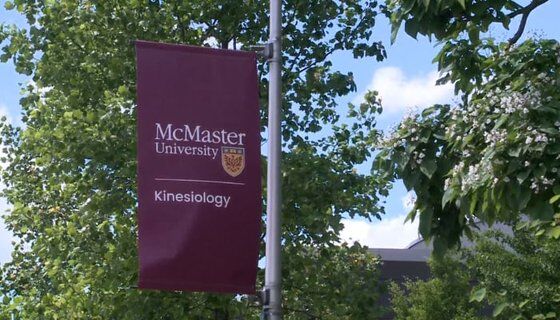
McMaster receives $50M gift for local kinesiology institute, scholarships
McMaster University received a $50 million philanthropic donation, which it will use to develop a new Kinesiology in...
www.chch.com
McMaster researchers use friendly viruses to tackle inflammatory bowel disease.
Researchers from Health Sciences and Engineering worked together on a targeted approach using bacteriophages to disarm harmful microbes without disrupting the broader gut ecosystem.
U of T, McMaster anchor new venture capital fund to back life sciences spinouts https://www.theglobeandmail.com/business/economy/article-u-of-t-mcmaster-anchor-new-venture-capital-fund-to-back-life-sciences/?utm_source=dlvr.it&utm_medium=twitter

U of T, McMaster anchor new venture capital fund to back life sciences spinouts via @globeandmail
U of T, McMaster anchor new venture capital fund to back life sciences spinouts
Fund managed by Genesys Capital also draws backing from Ontario, RBC and Temerty family
ow.ly
McMaster University and University of Toronto announce early-stage life sciences venture fund with @GenesysCapital supporting Ontario startups to address health-care challenges, boost the Canadian economy and improve patient care

McMaster and U of T announce early-stage life sciences venture fund with Genesys Capital
The support for startups in Ontario promises to address health-care challenges, boost the Canadian economy and improve patient care.
ow.ly
“We saw with our own grandparents or siblings that they were going through the journey of hearing loss themselves and burning money through many different pairs of hearing aids” #keeplistening @McMasterU @CBC
These university students from Hamilton have created hearing aids that are a fraction of the cost...
Three students at McMaster University in Hamilton say they’ve developed a low-cost hearing aid they hope will make hearing care more accessible.
www.cbc.ca
First Americans hunted largest game through Western Hemisphere, researchers find.
The earliest Indigenous populations in the Americas had highly specialized diets, primarily hunting the largest animals on the landscape, archeologists at the University of Alaska Fairbanks and
A research-intensive, student-centred university
McMaster recognises that a key element of its internationalisation strategy is forging global partnerships – research and educational alliances based on reciprocity, transfer of knowledge and resources, engagement with communities, and a commitment to effective collaboration.
They are involved with projects in over 130 countries, and within those countries have built over 1200 partnerships.
McMaster University is actively engaged every year in hundreds of international partnerships and collaborations, and these connections include; faculty exchanges, research collaborations, capacity building initiatives, joint supervision of doctoral students, student exchanges and mobility agreements.
Mission and vision
- McMaster's purpose is the discovery, communication and preservation of knowledge
- Committed to creativity, innovation and excellence in teaching, research and scholarship
- We value integrity, quality, inclusiveness and teamwork in everything we do
- We inspire critical thinking, personal growth and a passion for lifelong learning
- We serve the social, cultural and economic needs of our community and our society
17th in the THE Impact Rankings
70+
Research centres and institutes
$493,500m
Research intensity (per faculty member)
With more than 70 research centres and institutes, McMaster University has a high focus on collaborative research within many faculties, and with a particular focus on experimental sciences.
McMaster is collaborating across borders in the advancement of aerospace and earth science research, joining forces with the Operational Space Medicine program at the Canadian Space Agency and the National Aeronautics and Space Administration (NASA). They have also participated in the North American Carbon program, alongside NASA, the National Oceanic and Atmospheric Administration, the United States Department of Agriculture, and the United States Geological Survey, allowing graduate students to gain experience with field measurements and climate modeling works.
Become a member
The World 100 Reputation Network is a group of the best universities in the world, delivering research that enhances reputation and offering leaders the chance to develop their own careers on a global stage. Members benefit from events and study tours, training, monthly media monitoring, and unique reputation research to provide institutional advantage.